Halloween Traditions
Halloween traditions are the result of centuries of cultural blending, evolving from ancient ritual practices into the modern celebrations seen today. Many of these traditions can be traced back to the Celtic festival of Samhain, which marked the end of the harvest season and the beginning of winter. Samhain was believed to be a time when the boundary between the living and the dead became blurred, allowing spirits to return. This belief shaped many early customs, including the use of fire, disguises, and offerings intended to protect the living and influence unseen forces.
One of the most recognizable Halloween traditions, wearing costumes, originated as a form of spiritual protection. During Samhain, people would wear masks or disguises to avoid being recognized by wandering spirits. By blending in or appearing as supernatural beings themselves, they believed they could avoid harm. Over time, this practice evolved from a defensive ritual into a form of celebration and creativity. Today, costumes are less about protection and more about expression, allowing individuals to adopt new identities for a night.
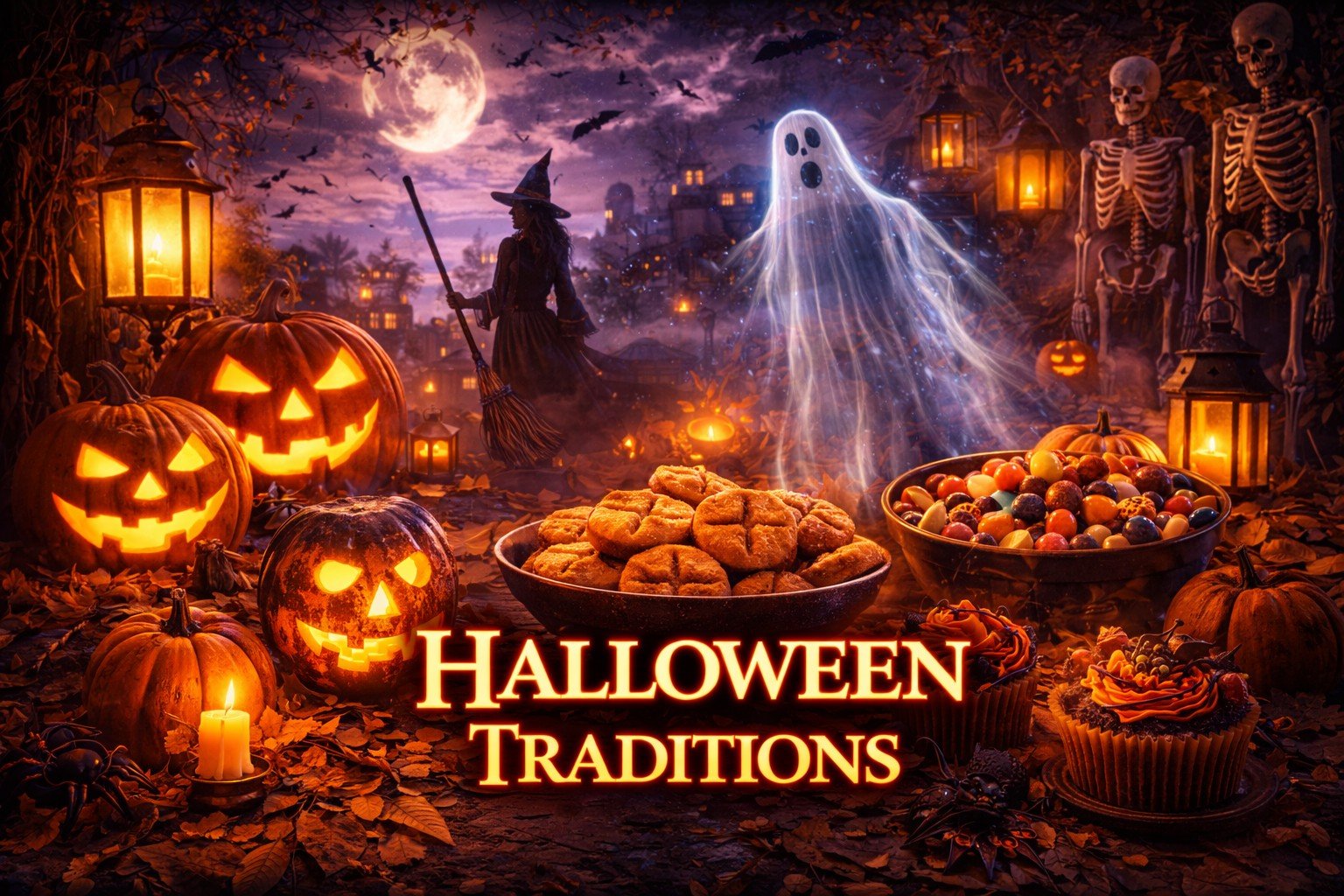
The carving of pumpkins into jack-o’-lanterns is another tradition with deep historical roots. Originally, people in Ireland and Scotland carved faces into turnips or other root vegetables, placing them outside their homes to ward off spirits. This practice was tied to folklore, including tales of wandering souls who could be repelled by light and symbolic faces. When these traditions were brought to North America, pumpkins became the preferred material due to their size and availability. The modern jack-o-lantern, now a central symbol of Halloween, reflects both its protective origins and its transformation into decoration.
Trick-or-treating also has origins in older customs, particularly the practice of “souling.” During the medieval period, individuals, often children or the poor, would go door to door offering prayers for the dead in exchange for food, known as soul cakes. This exchange created a link between the living and the deceased, reinforcing the idea that the actions of the living could influence the fate of souls. Over time, this evolved into more playful forms of visiting homes, eventually becoming the modern practice where children collect candy.
Bonfires and lanterns played a central role in early Halloween traditions as well. Fire was seen as a powerful protective element, capable of warding off evil spirits and providing light during a time associated with darkness. Communities would gather around large fires, both for warmth and for ritual purposes. These gatherings often included storytelling, music, and communal activities, creating a sense of shared experience that remains a core aspect of Halloween celebrations today.
Another lesser-known tradition involves divination games, which were particularly popular among young people. These activities, often involving food or household items, were used to predict future relationships or fortunes. For example, mirrors, apples, and nuts were used in various rituals to gain insight into one’s future. These practices highlight how Halloween once served as a time for exploring uncertainty and possibility, rather than purely entertainment.
Seasonal decorations, including skeletons, ghosts, and witches, also have symbolic origins. These figures reflect historical fears and beliefs about death, the supernatural, and the unknown. Witches, in particular, became associated with Halloween due to their perceived connection to magic and the spirit world. Over time, these symbols have shifted from representations of fear to elements of playful imagery, contributing to the distinctive aesthetic of the holiday.
In modern times, Halloween traditions have become a blend of historical practices and contemporary influences. While many of the original meanings have faded, the underlying themes of transformation, community, and the interplay between light and darkness remain. The holiday continues to evolve, but its traditions still carry echoes of the past, linking present-day celebrations to ancient beliefs and practices.