
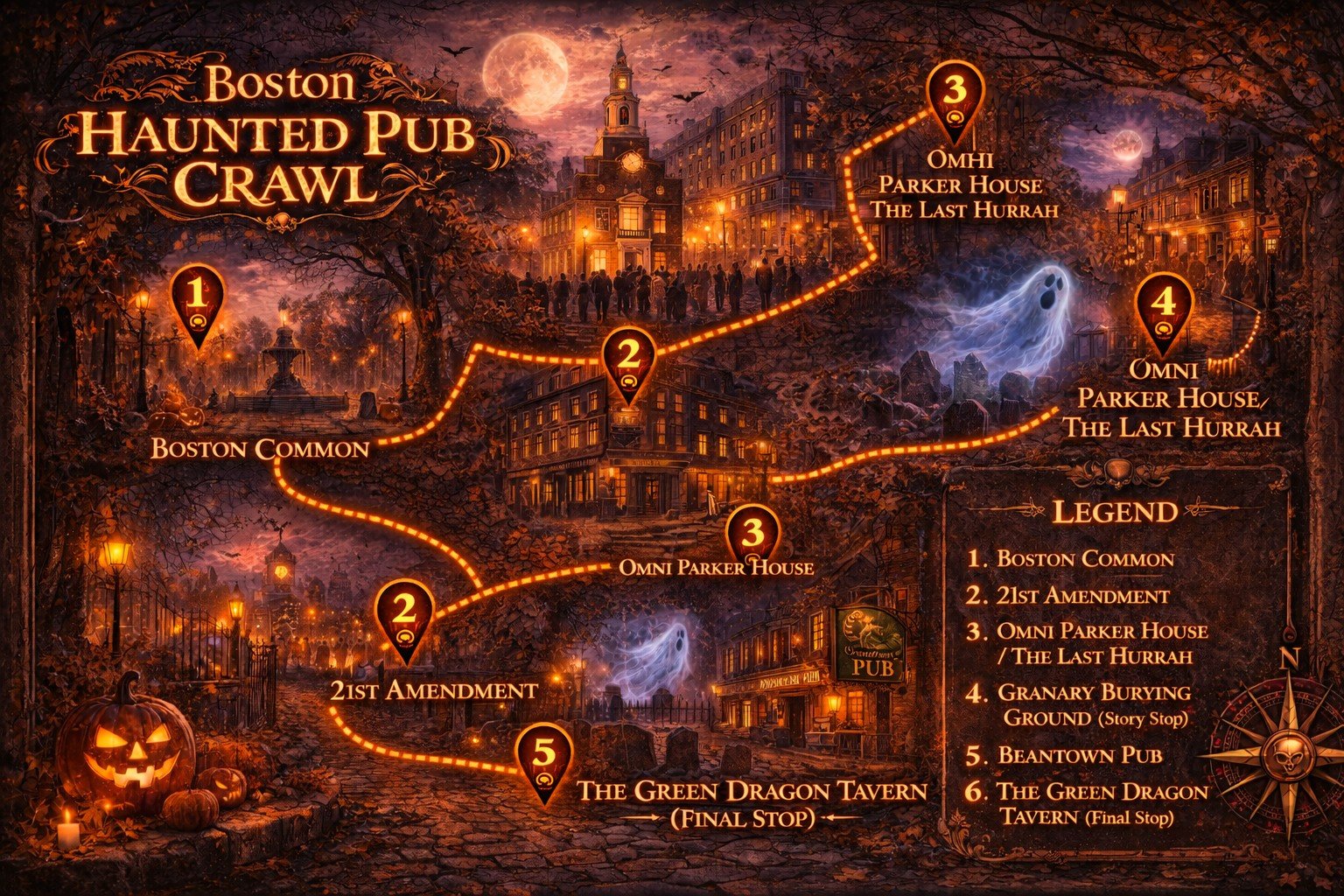
Haunted Boston
Boston Common
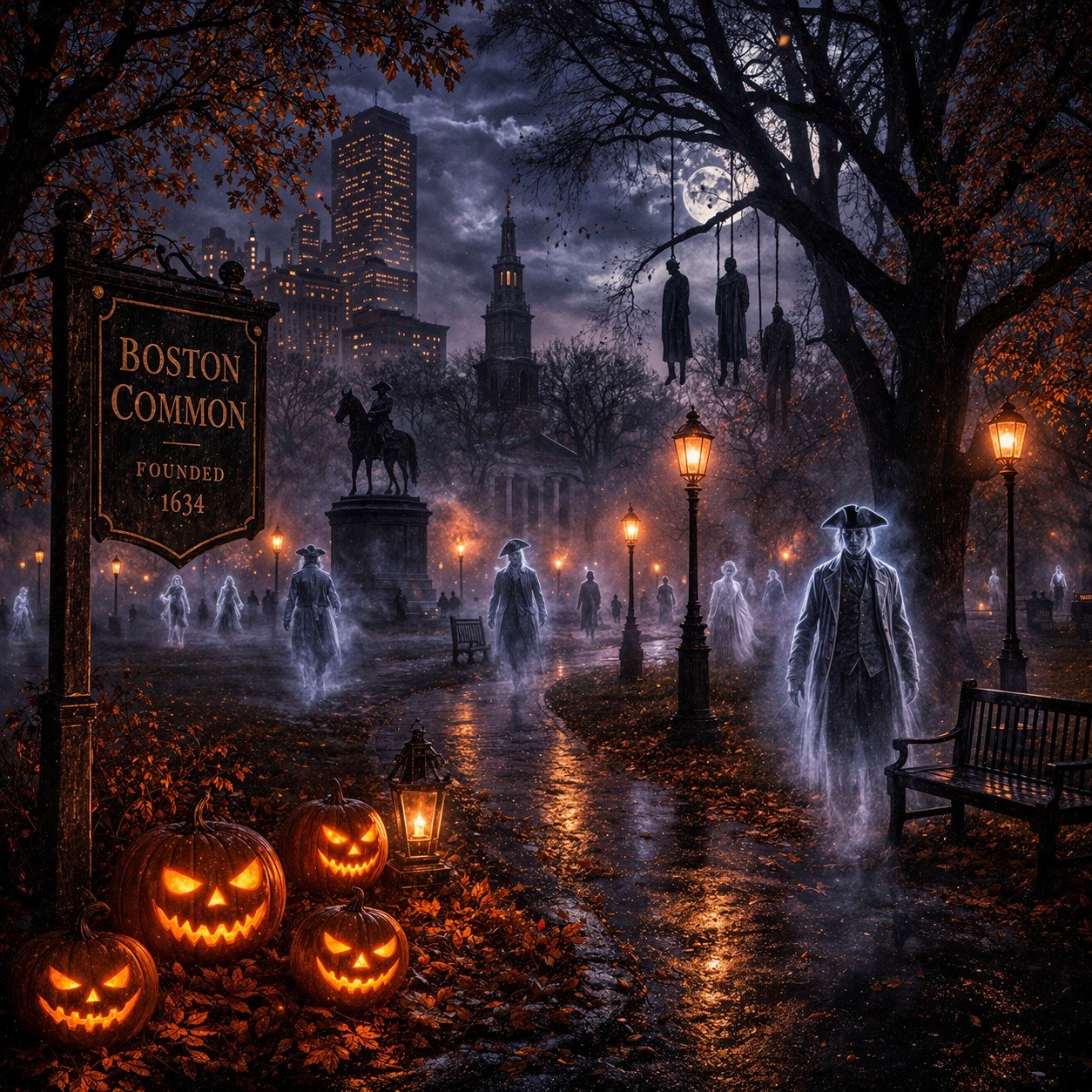 The tour/crawl begins, at Boston Common, as the last light fades and the park takes on a different character. What feels open and welcoming by day becomes something
quieter and more watchful at night. The paths, worn by centuries of footsteps, seem to hold onto the past. As you gather the group, it’s easy to imagine the crowds
that once stood here for very different reasons, public gatherings that weren’t always celebratory. The rustle of leaves and distant city noise create a contrast
that makes even small sounds stand out. It’s not that anything visibly happens, but rather that the space feels layered, as though time hasn’t fully moved on.
The tour/crawl begins, at Boston Common, as the last light fades and the park takes on a different character. What feels open and welcoming by day becomes something
quieter and more watchful at night. The paths, worn by centuries of footsteps, seem to hold onto the past. As you gather the group, it’s easy to imagine the crowds
that once stood here for very different reasons, public gatherings that weren’t always celebratory. The rustle of leaves and distant city noise create a contrast
that makes even small sounds stand out. It’s not that anything visibly happens, but rather that the space feels layered, as though time hasn’t fully moved on.
You gather the group near where the Great Elm once stood, the tree that, for generations, was used for public hangings, and tell the story of Mary Dyer. This wasn’t hidden away justice. It was deliberate, visible, and meant to be witnessed. Crowds would gather here, sometimes in the thousands, to watch the condemned meet their end. One of the most talked-about figures connected to this place is Mary Dyer, a Quaker executed in 1660. She had been warned, banished, and given multiple chances to leave. Instead, she kept returning, challenging the authority of the Puritan leadership. When she was finally brought here, it’s said the crowd was quieter than usual, not out of respect, but uncertainty. She wasn’t defiant in the way people expected. She was calm.
According to some accounts, when the moment came, there was a stillness in the air that felt unnatural. Even after the execution, witnesses described a strange reluctance to disperse, as though something unresolved lingered in the space. In the years that followed—and even into more recent times—people have reported something unusual in this part of the Common. Not full apparitions, not dramatic hauntings, but a very specific sensation: the feeling of being watched when there’s no one there. Some describe hearing footsteps matching their own pace, stopping when they stop. Others mention a sudden drop in temperature in an otherwise open space, as though stepping into something unseen. These experiences tend to happen not deep in the park, but close to where the tree once stood—where the boundary between spectacle and death was once at its thinnest. You can pause here, let the group take in the space, and then leave them with a simple thought: “This is one of the few places in Boston where people didn’t just pass through history… they were held in it. And sometimes, places like that don’t let everything go.”
After this you should move on to the first bar...the 21st Ammendment.
The 21st Ammendment
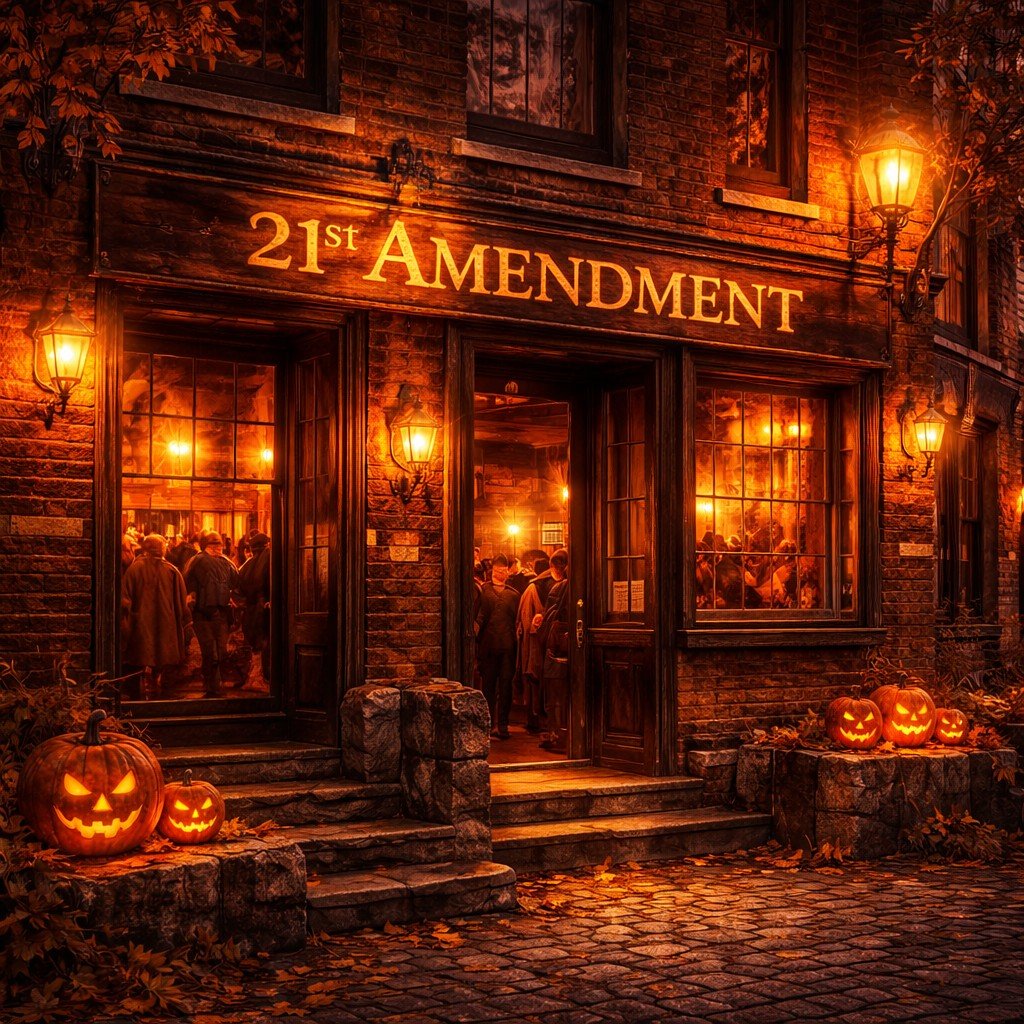 (Fun fact) The bar/pub is named after the 21st Amendment which repealed the 18th Amendment and was ratified on December 5, 1933, and officially ended nationwide Prohibition in the United States.
It is a unique amendment as it's the only one to repeal another and the only one ratified by state conventions rather than legislatures.
(Fun fact) The bar/pub is named after the 21st Amendment which repealed the 18th Amendment and was ratified on December 5, 1933, and officially ended nationwide Prohibition in the United States.
It is a unique amendment as it's the only one to repeal another and the only one ratified by state conventions rather than legislatures.
Gather the group outside, just before heading in, and point out how close you are to the heart of colonial Boston,where tension, secrecy, and shifting loyalties once defined everyday life. Back in the late 1700s, this area wasn’t just a place for drinking and socializing, it was where information moved quietly, often in whispers. Taverns like this weren’t just gathering spots; they were unofficial meeting places where allegiances were tested, and conversations weren’t always meant to be overheard.
There’s a story, though never fully confirmed, but often repeated, that during the years leading up to the American Revolution, a man used to frequent this area regularly. He wasn’t known by name, at least not publicly. Some believed he was passing information between British officials and colonial figures, playing both sides. Others thought he was simply listening, collecting what people said when they thought no one important was paying attention. One night, he was seen leaving in a hurry after a tense conversation. Witnesses later claimed there had been an argument, though no one could agree on what was said. After that night, he was never seen again. No body was found. No official record of what happened. Just absence.
Now here’s where things get interesting. Staff and patrons over the years have occasionally described a strange feeling near the bar area late at night, particularly when the place begins to empty. Not fear exactly, but the sense that someone is standing just behind you, close enough to hear what you’re saying. A few people have turned, expecting to see someone leaning in, only to find empty space. Others have mentioned hearing what sounds like a voice mid-conversation, low, indistinct, as though someone is speaking just out of earshot. But when they stop to listen, it disappears. The story goes that if this man did exist, if he really was listening, collecting secrets, moving between loyalties—then maybe he never really stopped. You can finish with a pause and a glance toward the door and say, “Places like this were built on conversation… and not all of those conversations were meant to end. Be careful what you say in there.” A bit corny but keeps everything light and fast-moving.
After a few drinks you can move on to the Last Hurrah
The Last Hurrah
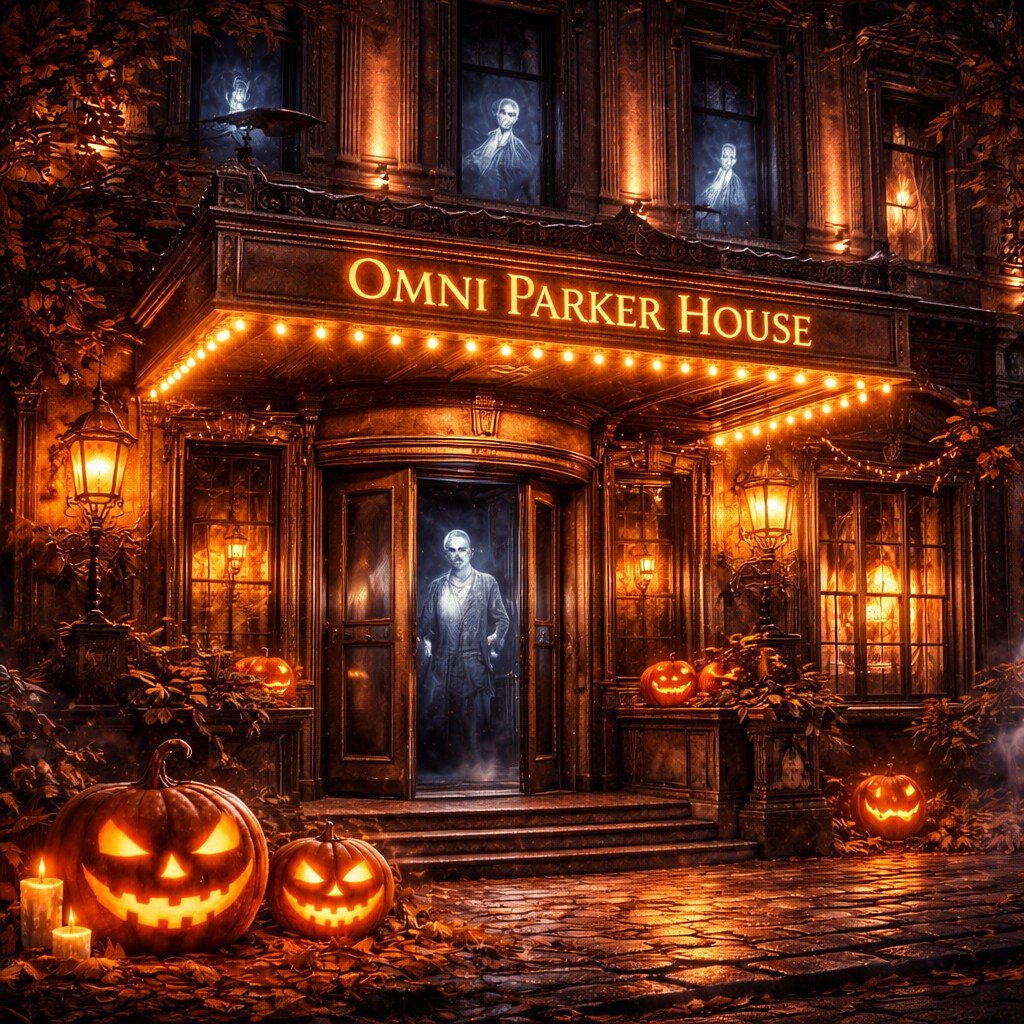 Moving toward Omni Parker House and stopping at The Last Hurrah (next to the
Granary Burying Grounds), the atmosphere shifts from open air to enclosed history. The bar feels warm and inviting, but there’s a sense that it has
hosted far more than just the present crowd. Conversations echo slightly differently, and reflections in mirrors seem to linger a fraction longer than expected. As drinks are served, it’s
easy to picture past guests occupying the same space, their presence almost overlapping with the present. The building’s long history gives it a depth that goes beyond décor, as though
it quietly observes everything that passes through it.
Moving toward Omni Parker House and stopping at The Last Hurrah (next to the
Granary Burying Grounds), the atmosphere shifts from open air to enclosed history. The bar feels warm and inviting, but there’s a sense that it has
hosted far more than just the present crowd. Conversations echo slightly differently, and reflections in mirrors seem to linger a fraction longer than expected. As drinks are served, it’s
easy to picture past guests occupying the same space, their presence almost overlapping with the present. The building’s long history gives it a depth that goes beyond décor, as though
it quietly observes everything that passes through it.
Gather the group inside, where the lighting is low and the noise of conversation creates a steady background hum. Then you draw attention to the idea that this isn’t just a bar, it’s part of one of the oldest continuously operating hotels in the country.
Over the decades, this building has hosted politicians, writers, actors; people who lived public lives, but also private ones. And one of the most frequently mentioned presences here is that of Harvey Parker, the hotel’s original owner. Parker was known for being meticulous. He didn’t just run the hotel, he managed every detail, often walking the halls himself, checking on guests, making sure everything was exactly as it should be. Staff records from the 19th century describe him as someone who rarely stepped away from the business, even late into the night.
When he died, the hotel continued on. But the stories didn’t stop. Employees over the years have described small, specific things, not dramatic, but consistent. Doors found open that had been locked. Lights switching on in empty rooms. The sensation, particularly late at night, of being watched, not in a threatening way, but in a supervisory one. As if someone is still checking that everything is running properly.
In this bar area, a few staff have mentioned something more personal. Glassware being moved slightly out of place when no one is nearby. A chair that seems to shift just enough to notice when the room is quiet. Once, a bartender reportedly set up for closing, only to return a few minutes later and find everything subtly rearranged, not wrong, just… different. The detail that tends to stick with people is this: nothing is ever overturned, broken, or chaotic. Everything remains orderly. Almost as if whoever is responsible still cares about the place.
You can let that sit for a moment, then add:
“Most ghost stories are about something unfinished… something unresolved. But here, if there is something, it doesn’t feel lost. It feels… present. Like someone who never saw a reason to leave.”
Then gesture lightly around the room:
“And if you’d spent your life making sure everything ran perfectly… why would you?”
The next stop, after a few drinks, is the Beantown Pub.
Beantown Pub
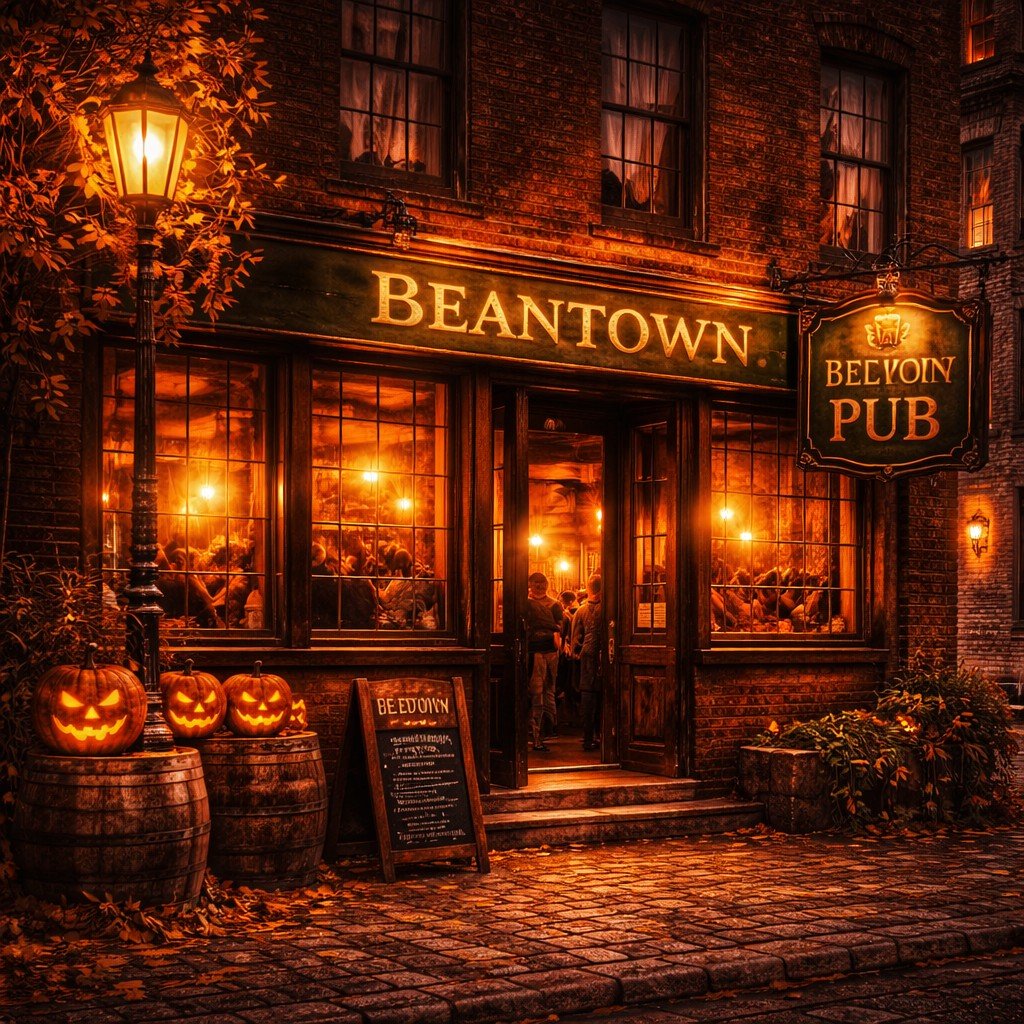 At Beantown Pub, the contrast becomes part of the experience. Inside, the bar is lively, filled with conversation and movement. Yet just beyond the windows lies a cemetery,
visible in the dim light. Sitting with a drink, the juxtaposition becomes clear—one space full of life, the other still and unchanged. It creates a moment where the group
naturally reflects, even if only briefly, on the proximity of past and present.
At Beantown Pub, the contrast becomes part of the experience. Inside, the bar is lively, filled with conversation and movement. Yet just beyond the windows lies a cemetery,
visible in the dim light. Sitting with a drink, the juxtaposition becomes clear—one space full of life, the other still and unchanged. It creates a moment where the group
naturally reflects, even if only briefly, on the proximity of past and present.
Looking outside to the Granary Burying Ground, the mood can be changed again. The iron fence separates the living city from a still, enclosed world. The gravestones, uneven and worn, catch the low light in ways that make them appear to shift as you move. Standing there, even briefly, there’s a noticeable drop in noise, as if the space absorbs sound rather than reflects it. It’s a natural pause point, where conversation tends to quiet without being asked. You can begin by having the group look out toward the cemetery, especially if it’s visible in the low light.
You can address your group saying, “right now, you’re doing something that’s actually quite unusual for Boston. You’re socializing, drinking, talking… while sitting directly across from one of the city’s oldest burial grounds.”
The Granary holds the remains of some of the most well-known figures in early American history. But beyond the names people recognize, there are thousands of others, people whose stories didn’t make it into books, but who lived, worked, struggled, and died in this city. Now here’s where the story shifts. There have been occasional reports, nothing dramatic, nothing consistent, but just enough to make people pause. Patrons sitting by the windows have sometimes mentioned seeing movement among the gravestones late at night. Not shapes exactly… more like the suggestion of something shifting where nothing should be moving.
Now here’s where the story shifts. There have been occasional reports, nothing dramatic, nothing consistent, but just enough to make people pause. Patrons sitting by the windows have sometimes mentioned seeing movement among the gravestones late at night. Not shapes exactly… more like the suggestion of something shifting where nothing should be moving.
One detail comes up more than once. A figure, described not clearly, but as darker than the shadows around it, moving slowly between the rows. Not drifting, not floating… walking. As though following a path that only it remembers. When people turn to get a better look, it’s gone. Some have dismissed it as reflections on the glass, or tricks of the light. And that’s the easy explanation. But the strange part is this: a few have said the movement seemed to match the layout of the cemetery paths, paths that are difficult to see clearly at night from this distance. Then there’s something else. Some staff have occasionally mentioned that, late in the evening when things quiet down, there’s a subtle shift in the atmosphere near the windows. Conversations drop slightly in volume, almost unconsciously. People lean in closer when they talk, as though reacting to something without realizing it. You can let that sit, then finish with:
“Most places separate the living and the dead. Walls, distance, time. But here… you’re sharing space. Different sides of the glass, maybe, but not as far apart as it may seem.”
After a few drinks... you head to your final stop, the Green Dragon Tavern
The Green Dragon Tavern
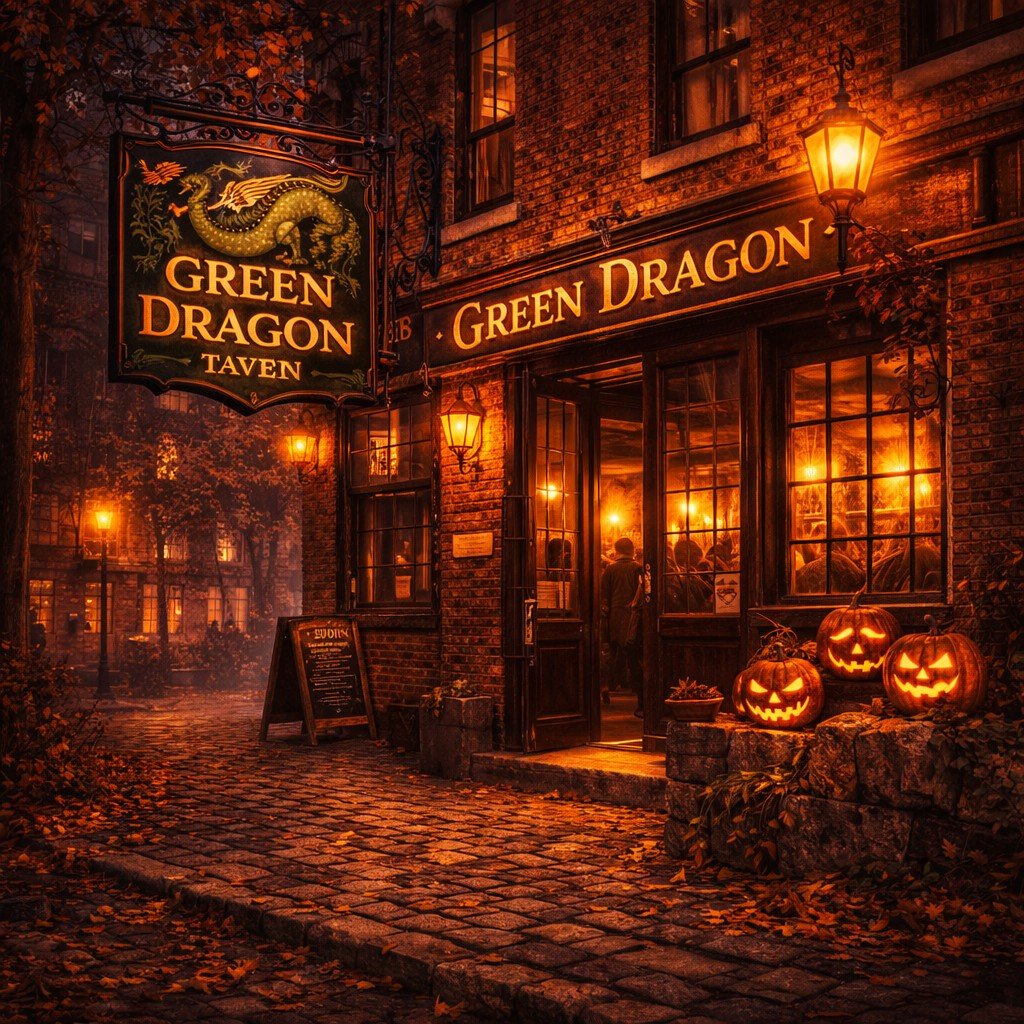 Finally, arriving at The Green Dragon Tavern, the tour settles into a space defined by history and storytelling. The tavern feels like a place where conversations have always mattered, where
voices carry ideas as much as sound. As the group gathers, the atmosphere becomes more social again, but with a sense that the evening has been building toward this point. The stories s
hared along the way seem to linger, blending into the hum of the room, making it feel as though the past is still part of the conversation.
Finally, arriving at The Green Dragon Tavern, the tour settles into a space defined by history and storytelling. The tavern feels like a place where conversations have always mattered, where
voices carry ideas as much as sound. As the group gathers, the atmosphere becomes more social again, but with a sense that the evening has been building toward this point. The stories s
hared along the way seem to linger, blending into the hum of the room, making it feel as though the past is still part of the conversation.
You gather the group inside, where the noise of conversation fills the room, and then lower your voice slightly, not enough to silence the group, but just enough to change the tone. Then you say, “This place wasn’t just a tavern. It was known as the headquarters of the Sons of Liberty. People like Samuel Adams didn’t just drink here, they planned here. Conversations in this room weren’t always meant to leave it.” You let that settle, and then continue.
“In the years leading up to the American Revolution, meetings would happen late at night. Doors closed. Voices lowered. People speaking carefully, knowing that the wrong word, overheard by the wrong person, could mean arrest…or worse.”
There’s a story that one evening, a meeting ran later than expected. Tensions were high, decisions weren’t unanimous, and not everyone in the room trusted everyone else. At some point, it’s said that one of the men stood abruptly, accusing another of passing information to the British. No one knows exactly what was said next. The accounts vary. But what is consistent is this: the argument didn’t resolve. The accused man left suddenly, and, according to the story, was never seen in the tavern again. No official record. No explanation. Just absence.
Now you shift slightly, bringing it into the present. “Over the years, staff have occasionally mentioned something unusual late at night, after the crowds thin out. Not sightings, nothing you could point to, but a feeling. The sense that a conversation is happening just out of earshot. That someone is standing behind you, listening. Not threatening… just present. Like they’re waiting to hear what’s being said.”
Some have described hearing a chair move when no one is there. Others mention catching fragments of what sounds like voices, too faint to make out, but enough to notice, and you can finish with:
“Places like this were built on secrecy. On whispered conversations and careful alliances. And if something like that lingers… it wouldn’t announce itself. It would do exactly what it always did, It would listen.”