About Halloween Boston
Halloween in Boston is a uniquely layered experience, shaped by centuries of history, evolving traditions, and a strong sense of place. Unlike many cities where Halloween is primarily a modern celebration, Boston’s deep historical roots give the holiday an added dimension, where the past feels closely connected to the present. From its origins in ancient seasonal rituals to the vibrant events seen today, Halloween Boston offers a blend of atmosphere, culture, and community that reflects both old and new influences.
At its core, Halloween traces back to the ancient Celtic festival of Samhain, a time when the boundary between the living and the dead was believed to thin. These early beliefs shaped many of the traditions that continue today, including costumes, firelight, and the symbolic presence of spirits. In Boston, a city known for its colonial architecture and historic sites, these themes resonate strongly. Walking through older neighborhoods or past historic cemeteries, it is easy to see why Halloween feels particularly authentic here, with the environment itself reinforcing the sense of history and continuity.
One of the defining aspects of Halloween Boston is its strong connection to regional history, particularly through nearby Salem and the legacy of the Salem Witch Trials. While Salem is often the focal point for large-scale Halloween tourism, Boston provides a broader urban context, offering everything from ghost tours and historic walks to themed events and nightlife. This creates an opportunity for visitors and residents alike to explore different facets of the holiday, from its historical origins to its contemporary expressions.
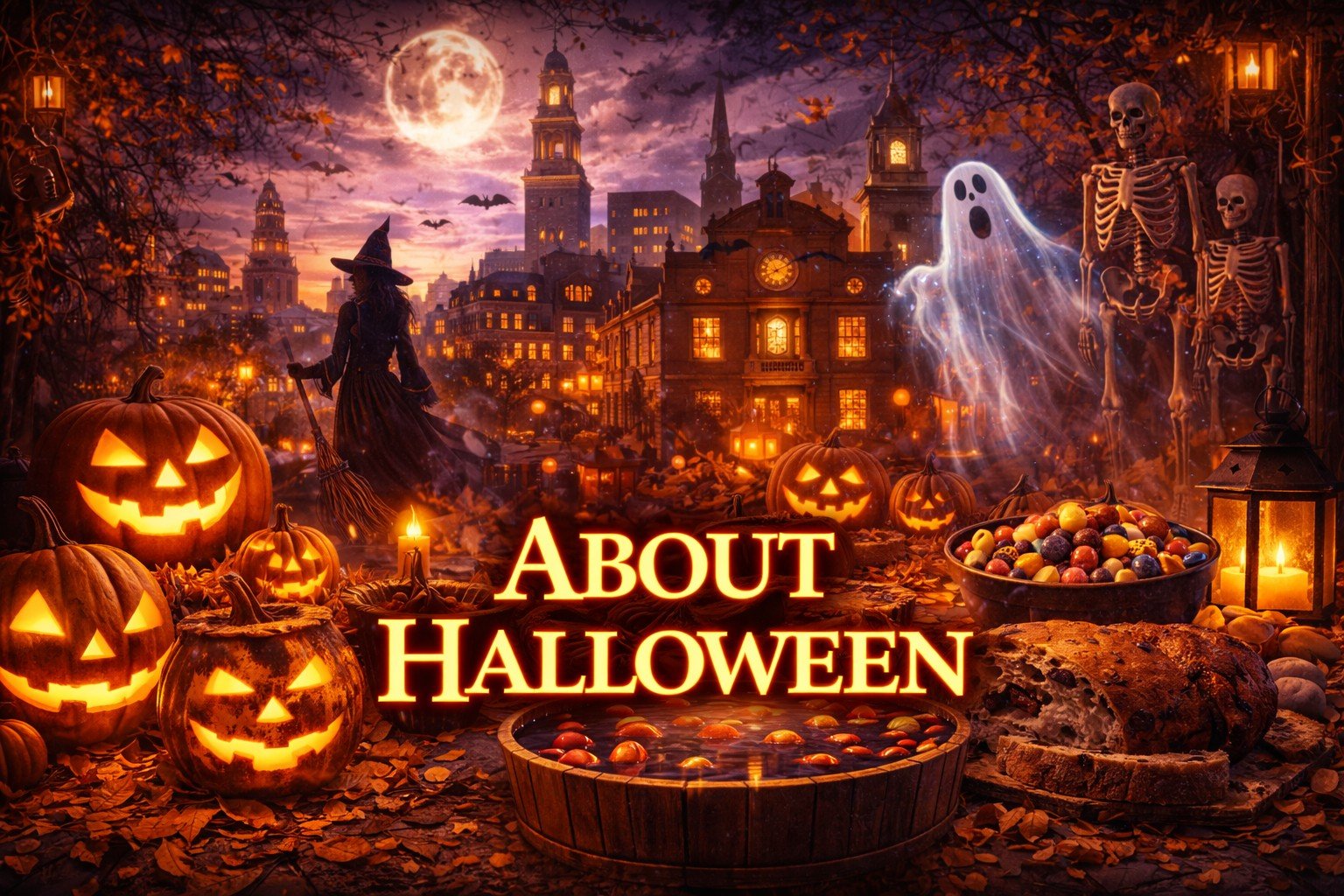
Food plays an important role in the Halloween experience, linking modern celebrations to harvest traditions that date back centuries. Seasonal staples such as apples and pumpkins remain central, reflecting their historical significance in both ritual and daily life. In Boston, these ingredients appear in a wide range of forms, from caramel apples at local events to pumpkin-based dishes featured in restaurants and cafés. Exploring Halloween food traditions provides insight into how simple agricultural practices evolved into symbolic and cultural markers that define the season today.
Games are another key element that connects past and present. Many traditional Halloween games originated as forms of divination, particularly among young people seeking insight into their future. Activities like bobbing for apples or interpreting the behavior of nuts in a fire were once taken seriously as predictive tools. In modern Boston, these games have been transformed into lighthearted entertainment, often featured at parties, community gatherings, and seasonal festivals. They retain their historical roots while adapting to contemporary social contexts, emphasizing fun and interaction over ritual meaning.
Halloween traditions more broadly reflect a similar pattern of evolution. Practices such as carving jack-o-lanterns, wearing costumes, and going door-to-door for treats all have origins in earlier customs designed to protect, disguise, or connect with the spirit world. In Boston, these traditions are often enhanced by the city’s physical environment, where historic streets, gas lamps, and older buildings provide a natural backdrop for seasonal decoration and celebration. This combination of setting and tradition helps create a distinctive Halloween atmosphere that is both immersive and memorable.
Ultimately, Halloween Boston is defined by its ability to bring together multiple strands of history and culture into a cohesive experience. It is a holiday that encourages exploration, whether through learning about its origins, participating in traditional activities, or simply enjoying the seasonal atmosphere. By connecting history, food, games, and traditions, Boston offers a version of Halloween that feels both rooted and dynamic, making it one of the most engaging places to experience the holiday in the United States.