
Haunted Boston
Omni Parker House
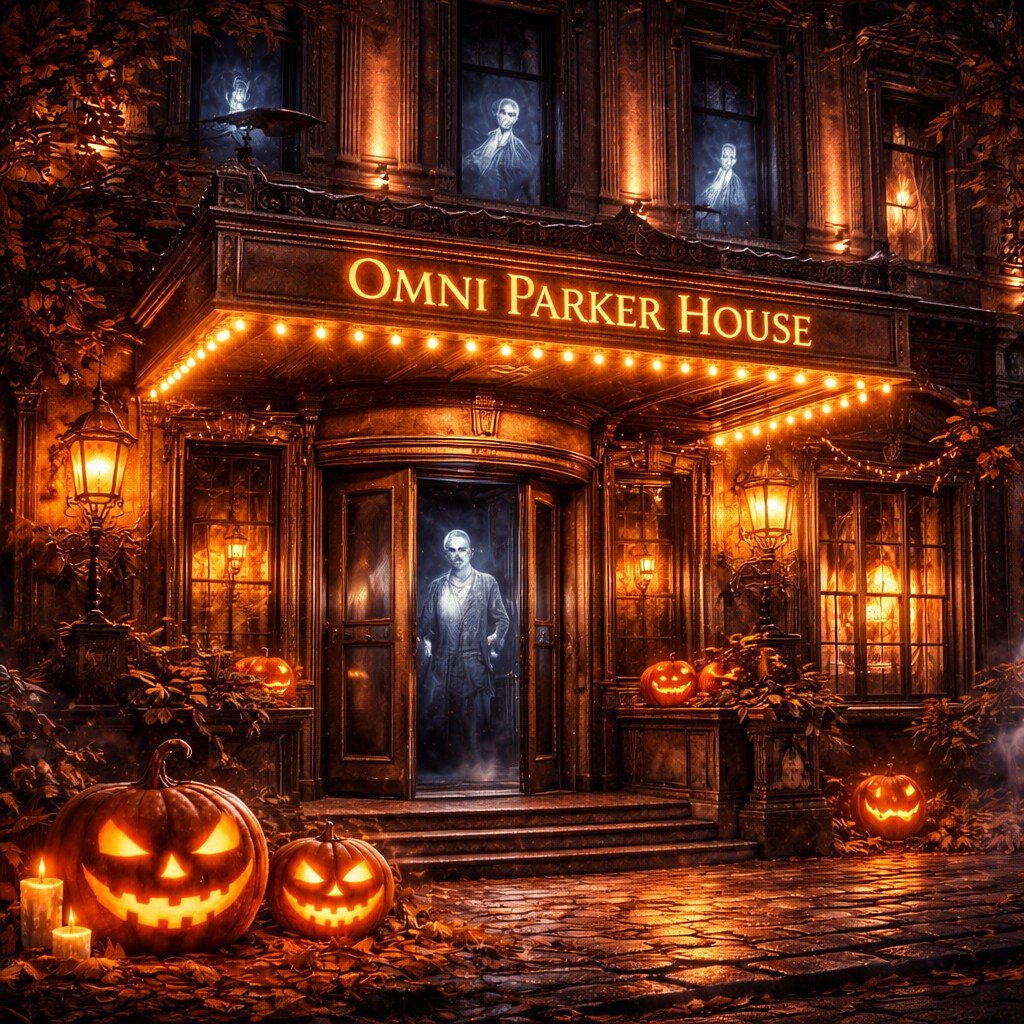 The Omni Parker House is widely regarded as one of the most haunted locations in Boston, with a long-standing reputation built on decades of reported paranormal activity.
Opened in 1855, the hotel has hosted countless guests, including notable figures such as Charles Dickens and John F. Kennedy. Its deep historical roots, combined with its
role as a central gathering place, have contributed to a layered atmosphere where stories of unexplained occurrences continue to circulate.
The Omni Parker House is widely regarded as one of the most haunted locations in Boston, with a long-standing reputation built on decades of reported paranormal activity.
Opened in 1855, the hotel has hosted countless guests, including notable figures such as Charles Dickens and John F. Kennedy. Its deep historical roots, combined with its
role as a central gathering place, have contributed to a layered atmosphere where stories of unexplained occurrences continue to circulate.
At the center of many of these accounts is the figure of Harvey Parker, the hotel’s original owner. Staff and guests alike have reported sightings of a bearded man believed to be Parker, often described as appearing briefly before disappearing without explanation. These encounters are typically accompanied by subtle disturbances, such as doors opening on their own or lights behaving erratically. The persistence of these reports across generations has helped solidify the idea that Parker maintains a presence within the building he once ran.
One of the most frequently discussed areas of the hotel is Room 303, which is often described as a focal point for unusual activity. Guests staying in this room have reported hearing unexplained noises, sensing a presence when alone, and experiencing disturbances during the night. Some accounts describe objects being moved or the feeling of being watched, even in otherwise quiet conditions. While such experiences are subjective, the consistency of these reports has reinforced the room’s reputation as one of the hotel’s most active locations.
Beyond individual sightings, there is a broader sense among some visitors and employees that the building itself holds a residual energy. Reports of footsteps in empty hallways, disembodied laughter, and sudden cold spots contribute to an atmosphere that feels subtly different from that of a typical historic hotel. Given the number of people who have passed through its doors over more than a century and a half, it is perhaps unsurprising that stories of lingering presences have taken hold.
Whether viewed as genuine paranormal phenomena or as the natural result of suggestion, expectation, and environment, the Omni Parker House remains a focal point for Boston’s ghost lore. Its combination of documented history, consistent anecdotal reports, and atmospheric setting ensures that it continues to be regarded as one of the city’s most intriguing and enduring haunted locations.
If you're looking for something spooky to do this Halloween, having a drink at the hotel's bar is an inexpensive way to celebrate Halloween in Boston (opening times etc., can be accessed by clicking here
Kings Chapel Burying Ground
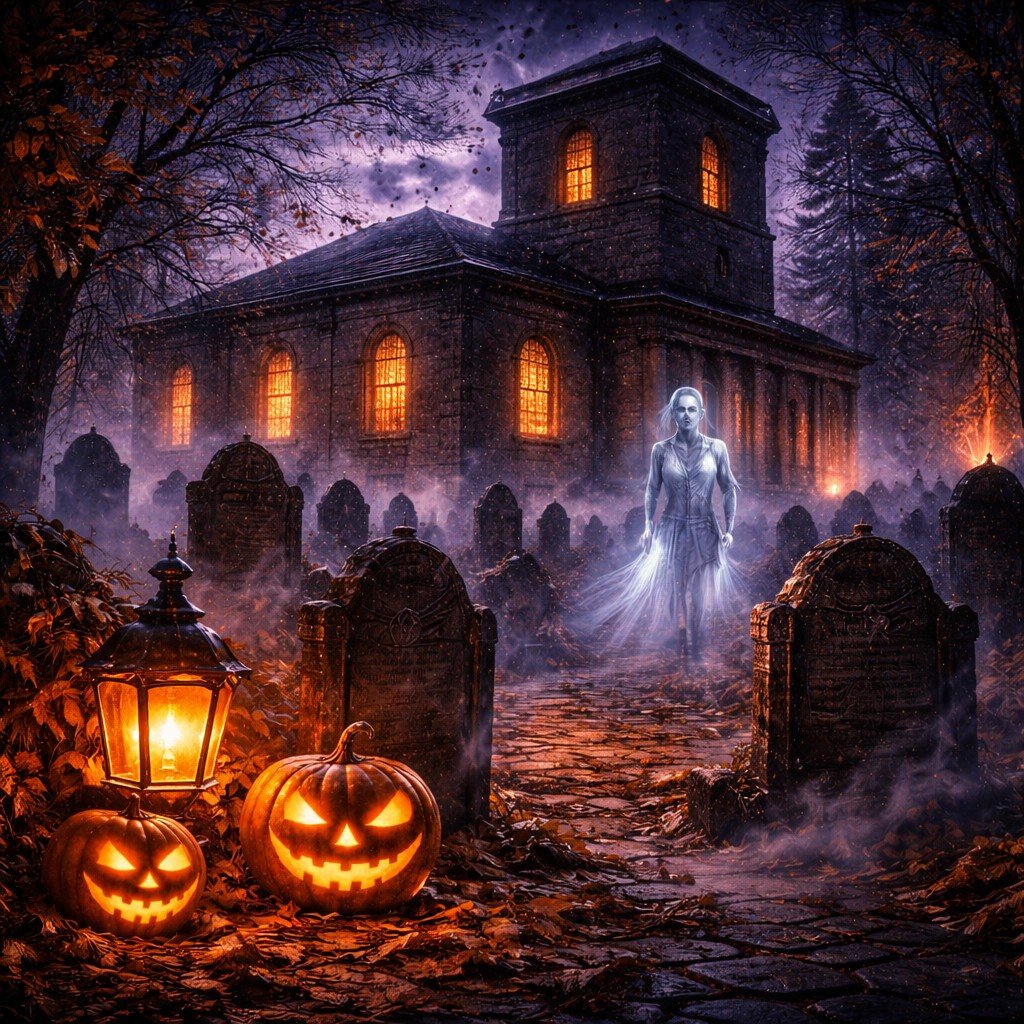 The King's Chapel Burying Ground is one of the oldest cemeteries in Boston, and its long history has made it a focal point for stories of hauntings and unexplained phenomena.
Established in 1630, the site predates most of the city around it, containing the remains of early settlers who lived through periods of disease, hardship, and conflict. With
centuries of burials layered beneath a relatively small space, the environment itself contributes to an atmosphere that many visitors describe as unusually heavy or unsettling.
The King's Chapel Burying Ground is one of the oldest cemeteries in Boston, and its long history has made it a focal point for stories of hauntings and unexplained phenomena.
Established in 1630, the site predates most of the city around it, containing the remains of early settlers who lived through periods of disease, hardship, and conflict. With
centuries of burials layered beneath a relatively small space, the environment itself contributes to an atmosphere that many visitors describe as unusually heavy or unsettling.
Much of the cemetery’s haunted reputation comes from recurring reports of shadowy figures and fleeting apparitions seen between the gravestones. Visitors and guides have described silhouettes moving where no one is present, often in peripheral vision, as though something is just out of sight. Others have reported sudden cold spots, even on otherwise mild evenings, along with an unexplained sense of being watched. These experiences tend to be brief and difficult to verify, yet they are repeated often enough to have become part of the site’s identity.
Historically, the burial ground is associated with some of the most difficult periods of early Boston life, including outbreaks of disease and the realities of colonial existence. In such contexts, death was frequent and often sudden, and burial practices were shaped by necessity rather than ceremony. From a psychological and environmental perspective, locations with concentrated histories of mortality often become focal points for ghost stories, as people attempt to interpret the emotional weight of such places. The presence of weathered headstones, uneven ground, and the passage of time all contribute to a sense that the past is still close to the surface.
At night, the atmosphere of King’s Chapel Burying Ground becomes even more pronounced. Surrounded by the modern city yet visually distinct from it, the cemetery feels like a preserved fragment of another era. Dim lighting, shadows cast by old trees, and the contrast between silence and the distant sounds of the city can heighten perception, making ordinary stimuli seem unusual or significant. This interplay between environment and expectation plays a key role in how hauntings are experienced and remembered.
Whether one interprets the reports of apparitions as genuine paranormal events or as the product of suggestion and setting, the reputation of King’s Chapel Burying Ground as a haunted site remains strong. Its combination of age, history, and atmosphere ensures that it continues to attract those interested in both the documented past and the possibility that something of it still lingers. If you're going to visit this site, you will need to do so before 4 pm.
Granary Burying Ground
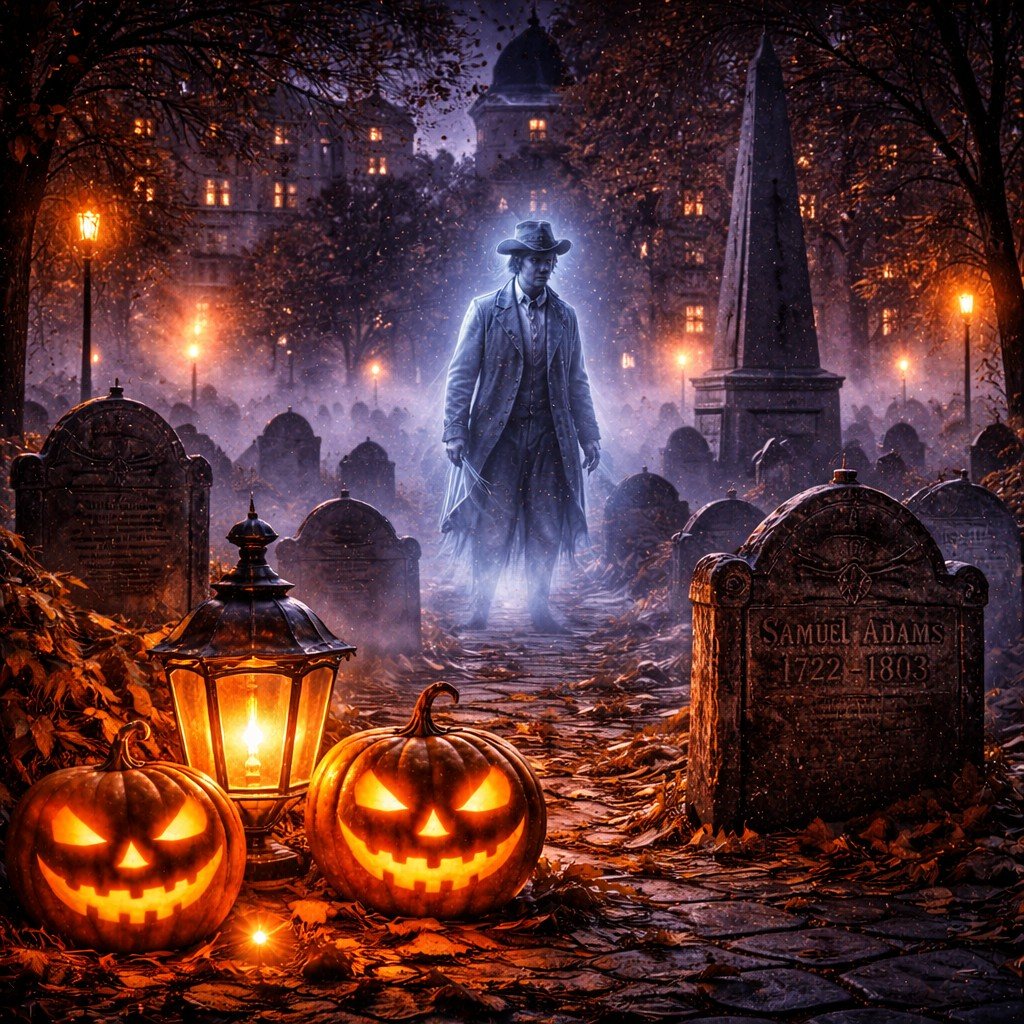 The Granary Burying Ground is one of the most historically significant cemeteries in Boston, and it has long been associated with stories of hauntings and unexplained phenomena.
Established in 1660, the burial ground contains the graves of prominent figures such as Samuel Adams, John Hancock, and victims of early epidemics. Its combination of historical
importance and the sheer number of interments has helped create an atmosphere that many visitors describe as both compelling and unsettling.
The Granary Burying Ground is one of the most historically significant cemeteries in Boston, and it has long been associated with stories of hauntings and unexplained phenomena.
Established in 1660, the burial ground contains the graves of prominent figures such as Samuel Adams, John Hancock, and victims of early epidemics. Its combination of historical
importance and the sheer number of interments has helped create an atmosphere that many visitors describe as both compelling and unsettling.
Much of the cemetery’s haunted reputation stems from repeated reports of apparitions and strange visual experiences. Visitors have described seeing figures moving among the gravestones, often disappearing when approached directly. These sightings are frequently reported at dusk or after dark, when shadows and lighting conditions can create ambiguous visual cues. Others have noted the sensation of being watched, particularly when standing near older or more densely clustered graves, where visibility is limited and the environment feels enclosed.
In addition to visual phenomena, there are accounts of physical sensations that contribute to the site’s reputation. Sudden drops in temperature, localized cold spots, and an unusual stillness in the air are commonly mentioned. While such experiences can often be explained by environmental factors, including wind patterns and the layout of surrounding structures, they are nevertheless interpreted by some as evidence of lingering presences. The combination of sensory cues and expectation plays a significant role in how these experiences are perceived and remembered.
Historically, the Granary Burying Ground is closely tied to periods of disease, conflict, and social upheaval. During the 17th and 18th centuries, outbreaks of illness and the realities of colonial life meant that death was a frequent presence. From a psychological perspective, locations with concentrated histories of mortality often become associated with ghost stories, as they carry a sense of unresolved narrative. The weathered headstones, uneven pathways, and encroachment of the modern city around the site further enhance the impression that the past remains close at hand.
At night, the contrast between the busy urban environment and the quiet interior of the cemetery becomes more pronounced. Surrounded by traffic and city lights, the burial ground itself remains dim and relatively silent, creating a sense of separation from the present. This isolation, combined with the visual texture of the gravestones and trees, can heighten awareness and make ordinary stimuli feel unusual. It is within this interplay of history, environment, and perception that the Granary Burying Ground has developed its enduring reputation as one of Boston’s most haunted locations. Visit early as it closes at 4 pm.
USS Constitution
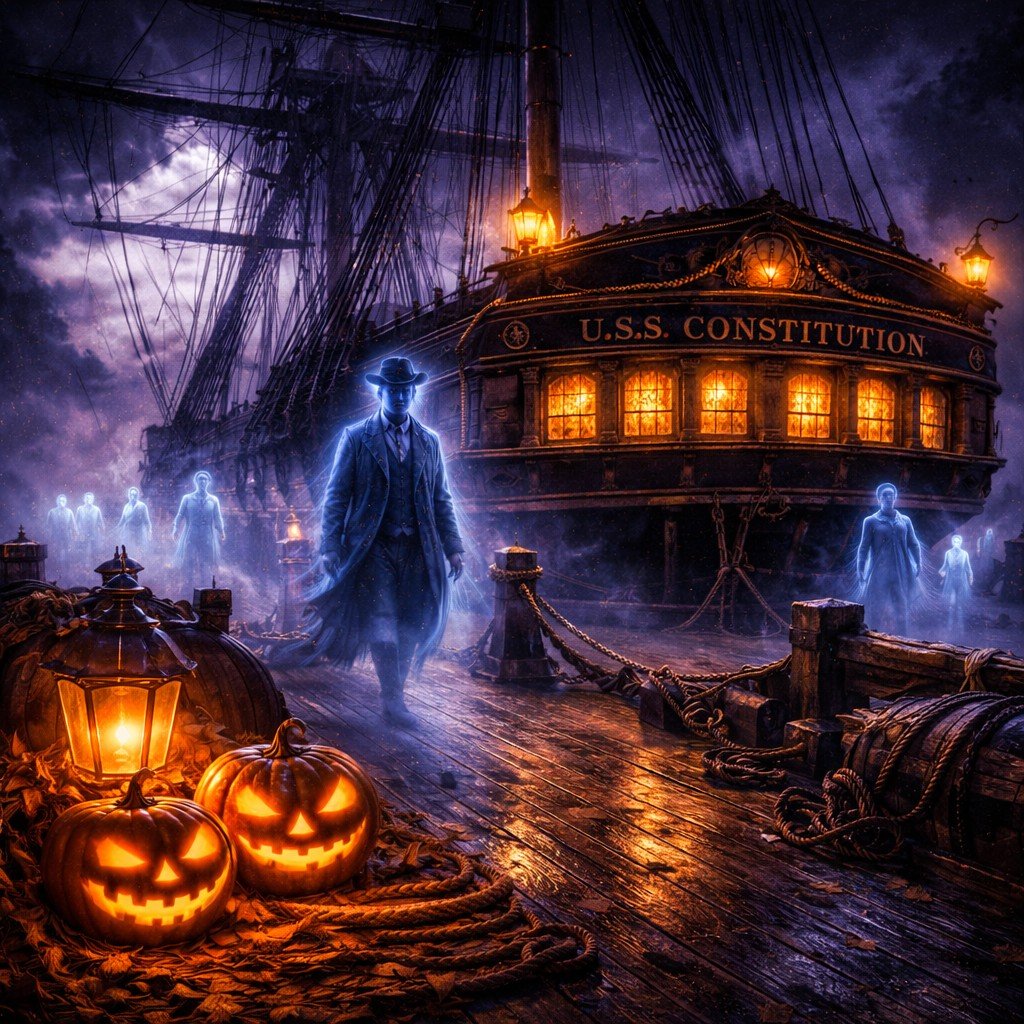 The USS Constitution, famously known as “Old Ironsides,” is not only one of the most historic naval vessels in the United States but also one of the most intriguing when it comes to
reports of hauntings. Docked in Boston, the ship has a long and storied past that dates back to its launch in 1797. Having seen active service in multiple conflicts, including the War
of 1812, the vessel has been the site of intense combat, injury, and death; conditions that often form the foundation for ghost stories tied to historic locations.
The USS Constitution, famously known as “Old Ironsides,” is not only one of the most historic naval vessels in the United States but also one of the most intriguing when it comes to
reports of hauntings. Docked in Boston, the ship has a long and storied past that dates back to its launch in 1797. Having seen active service in multiple conflicts, including the War
of 1812, the vessel has been the site of intense combat, injury, and death; conditions that often form the foundation for ghost stories tied to historic locations.
Many of the reported hauntings aboard the USS Constitution center on the lower decks, where sailors once lived, worked, and, in some cases, died. Visitors and staff have described hearing footsteps echoing through otherwise empty corridors, as well as the sound of voices when no one else is present. These auditory experiences are often brief and difficult to trace, yet they contribute to a persistent sense that the ship is not entirely empty, even when it appears to be.
Visual sightings have also been reported, with some individuals claiming to have seen shadowy figures moving along the decks or standing briefly in doorways before disappearing. These figures are often described as indistinct, sometimes appearing in period clothing, reinforcing the connection to the ship’s historical crew. While such sightings are typically fleeting, they are consistent with reports from other historic ships where long service histories and confined environments create a strong sense of presence.
The physical environment of the USS Constitution plays a significant role in shaping these experiences. The narrow passageways, low lighting, and wooden construction can amplify sounds and create shifting shadows, particularly at night. From a psychological perspective, these factors can heighten awareness and make ordinary stimuli seem unusual. However, for those inclined to interpret these occurrences as paranormal, the setting itself becomes evidence of lingering spirits tied to the ship’s past.
Another element that contributes to the ship’s haunted reputation is the emotional weight of its history. Naval combat in the late 18th and early 19th centuries was often brutal, with sailors facing injury, illness, and death in confined conditions. The idea that some of these individuals may still “remain” aboard the vessel resonates with the broader pattern of hauntings associated with places of hardship and loss.
Whether viewed through the lens of folklore, psychology, or genuine belief in the paranormal, the USS Constitution continues to attract attention as a haunted site. Its combination of historical significance, consistent anecdotal reports, and atmospheric environment ensures that it remains one of Boston’s most compelling locations for those interested in the possibility that the past can still be felt in the present.
Boston Common
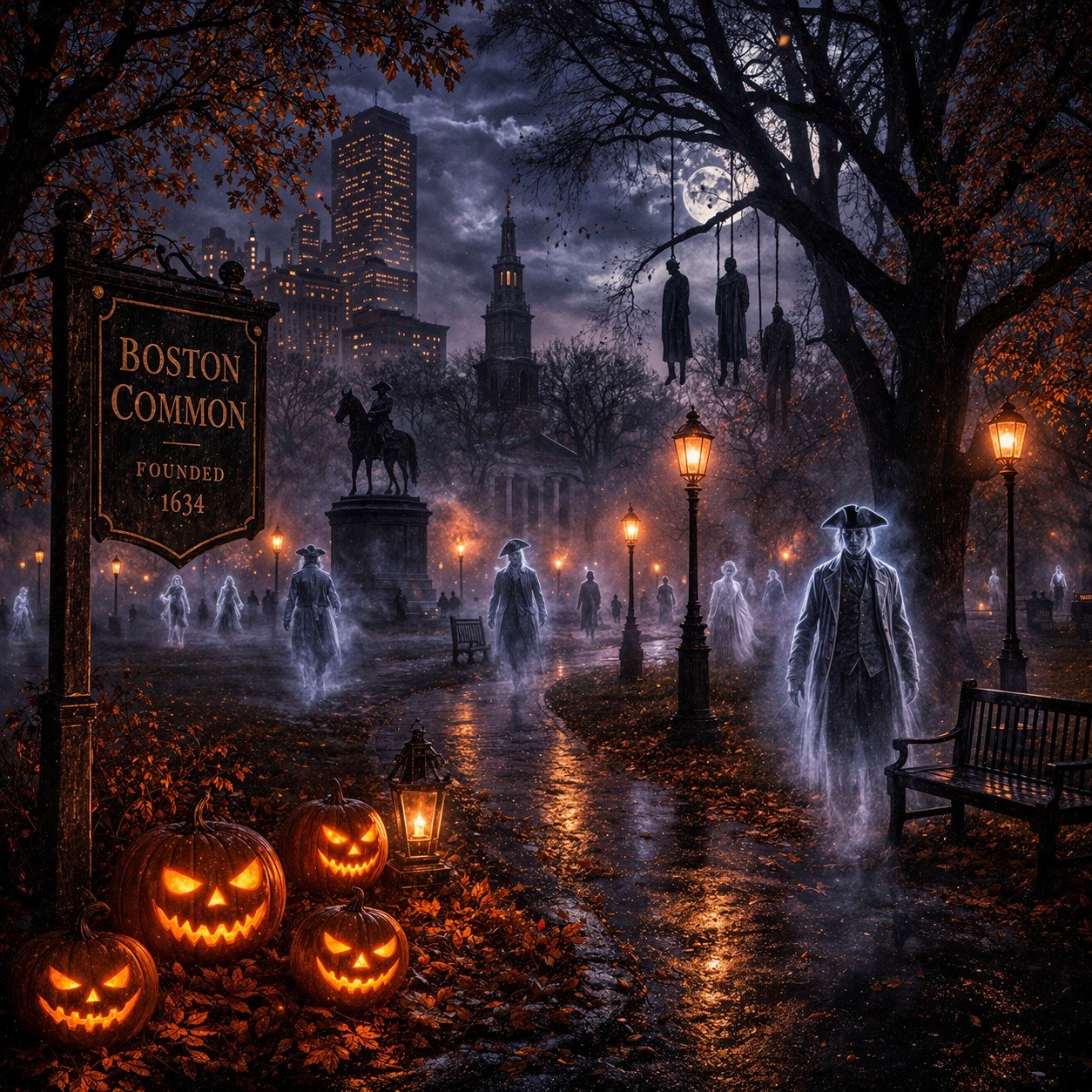 The Boston Common, the oldest public park in Boston, is often regarded as one of the city’s most haunted locations, not because of a single building, but due to the events that have
taken place across its grounds over centuries. Established in 1634, the Common has served many roles, including as a grazing field, military encampment, and, most notably, a site of
public punishment and execution. It is this history, particularly the use of the park for hangings, that underpins much of its haunted reputation.
The Boston Common, the oldest public park in Boston, is often regarded as one of the city’s most haunted locations, not because of a single building, but due to the events that have
taken place across its grounds over centuries. Established in 1634, the Common has served many roles, including as a grazing field, military encampment, and, most notably, a site of
public punishment and execution. It is this history, particularly the use of the park for hangings, that underpins much of its haunted reputation.
Central to many ghost stories is the “Great Elm,” a now-absent tree that once stood as the site where public executions were carried out. Individuals condemned to death were hanged there, often in front of gathered crowds, making the location both a place of justice and spectacle. Over time, reports began to emerge of apparitions believed to be connected to those executed, with sightings typically described as shadowy figures appearing briefly before fading into the surrounding darkness. While no single named individual dominates these accounts, the collective memory of those who died there has given rise to the idea of multiple restless spirits.
Visitors to Boston Common have also reported a range of sensory experiences that contribute to its reputation as a haunted space. These include sudden drops in temperature, the feeling of being watched, and the perception of movement in otherwise empty areas of the park. Such experiences are often reported during the evening or at night, when lighting is limited and the contrast between the open space of the park and the surrounding city becomes more pronounced. The combination of darkness, quiet, and historical context can heighten awareness and influence how ordinary stimuli are interpreted.
In addition to execution-related stories, there are also accounts linked to the Common’s use as a military encampment during periods such as the American Revolutionary War. Soldiers stationed in the area lived under harsh conditions, and some accounts suggest that figures in period dress have been seen walking across the grounds. These sightings are typically fleeting and indistinct, reinforcing the broader theme of residual rather than interactive hauntings.
From a psychological and environmental perspective, Boston Common possesses many of the characteristics associated with locations that develop haunted reputations. Its long history, association with death and conflict, and preserved physical space create a setting where the past feels present. The park’s layout, with its open fields, tree-lined paths, and areas of shadow, can also produce visual ambiguity, especially in low light.
Whether interpreted as genuine paranormal activity or as the product of suggestion, atmosphere, and history, Boston Common continues to be regarded as a place where the city’s past lingers. Its haunted reputation is less about a single ghost and more about the accumulation of stories tied to the many lives, and deaths, that have passed through it.
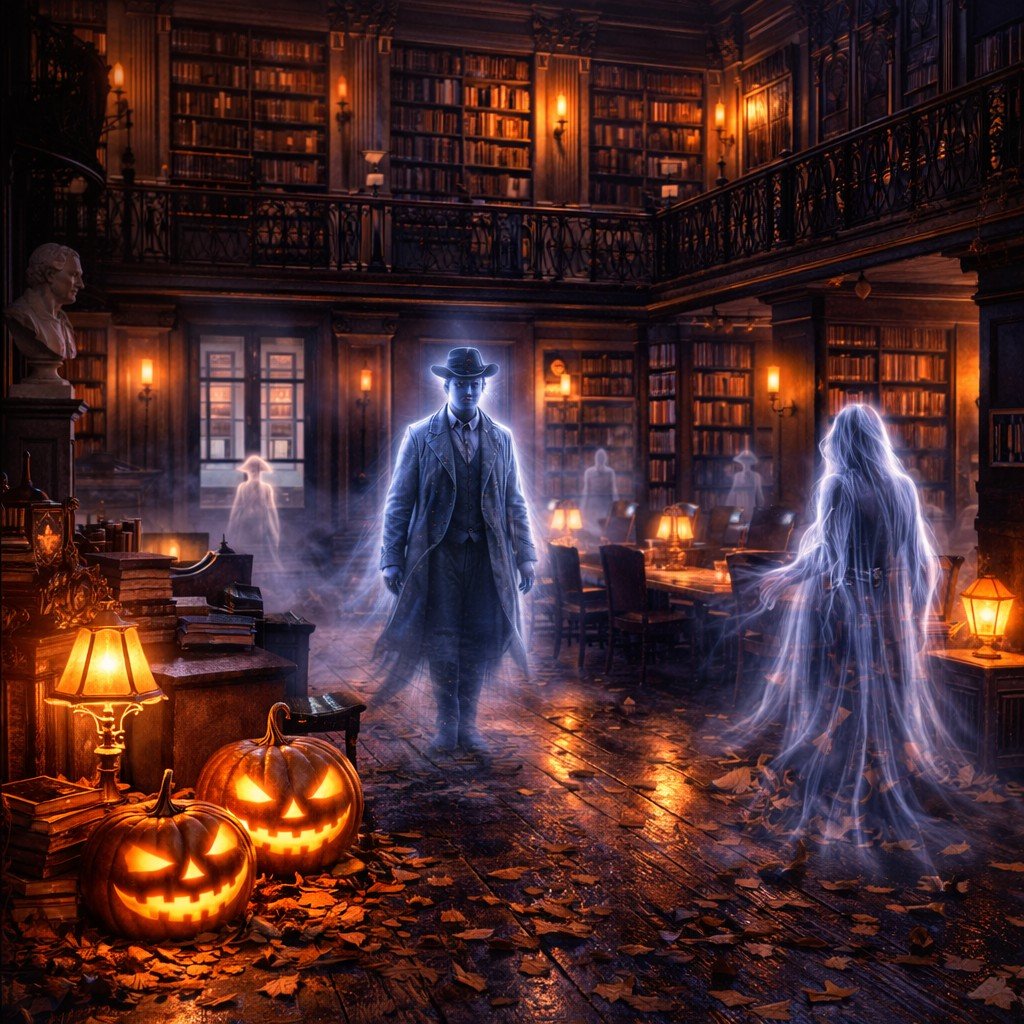 The Boston Athenaeum is one of the oldest independent libraries in the United States and, like many historic institutions in Boston, it carries a quiet but persistent reputation
for being haunted. Founded in 1807, the Athenaeum has long served as a place of scholarship, housing rare books, artworks, and archives. Its atmosphere—calm, dimly lit, and
steeped in history—provides an ideal setting for stories of unexplained occurrences, many of which have been reported by staff and visitors over the years.
The Boston Athenaeum is one of the oldest independent libraries in the United States and, like many historic institutions in Boston, it carries a quiet but persistent reputation
for being haunted. Founded in 1807, the Athenaeum has long served as a place of scholarship, housing rare books, artworks, and archives. Its atmosphere—calm, dimly lit, and
steeped in history—provides an ideal setting for stories of unexplained occurrences, many of which have been reported by staff and visitors over the years.
Unlike more overtly “haunted” locations such as cemeteries or former execution sites, the Athenaeum’s ghost stories are subtle and often centered on small disturbances rather
than dramatic apparitions. One of the most commonly reported experiences is the sound of footsteps in otherwise empty rooms or along quiet corridors. These sounds are often
described as measured and deliberate, as though someone is walking through the building, yet no one is found when investigated. In a space designed for silence and concentration,
such disturbances are particularly noticeable.
There are also accounts of books being moved or misplaced without explanation. Staff have reported items that were carefully shelved later appearing in different locations, as
well as the sensation that someone has recently handled materials that should not have been disturbed. Given the Athenaeum’s role as a repository of knowledge, these stories
are sometimes interpreted as the presence of former readers or scholars who remain attached to the collection.
Visual sightings are less common but do occur. Some visitors have described catching glimpses of figures in period clothing, often seen out of the corner of the eye and
disappearing when looked at directly. These figures are typically indistinct, reinforcing the idea that the hauntings at the Athenaeum are more suggestive than explicit.
There is no single widely recognized “named ghost,” but rather a general sense that multiple presences may be tied to the building’s long history.
From an environmental and psychological perspective, the Athenaeum possesses many of the characteristics associated with places that develop haunted reputations. The building’s
age, its quiet interior, and the presence of narrow corridors and shadowed reading rooms can all influence perception. Low lighting and the expectation of silence can heighten
awareness, making ordinary sounds—such as the creaking of wood or the shifting of air—seem unusual or significant.
Additionally, the Athenaeum’s long history of intellectual activity contributes to its aura. Generations of readers, writers, and thinkers have spent time within its walls,
and the idea that some trace of that presence remains is compelling. In this sense, the hauntings are often framed less as disturbances and more as echoes of the past.
Whether one interprets these accounts as paranormal or as the natural result of environment and suggestion, the Boston Athenaeum remains a place where history feels close and
tangible. Its haunted reputation is quiet, understated, and fitting for a building devoted to contemplation, making it one of Boston’s more intriguing and atmospheric locations.
The Boston Athenaeum is one of the oldest independent libraries in the United States and, like many historic institutions in Boston, it carries a quiet but persistent reputation
for being haunted. Founded in 1807, the Athenaeum has long served as a place of scholarship, housing rare books, artworks, and archives. Its atmosphere—calm, dimly lit, and
steeped in history—provides an ideal setting for stories of unexplained occurrences, many of which have been reported by staff and visitors over the years.